
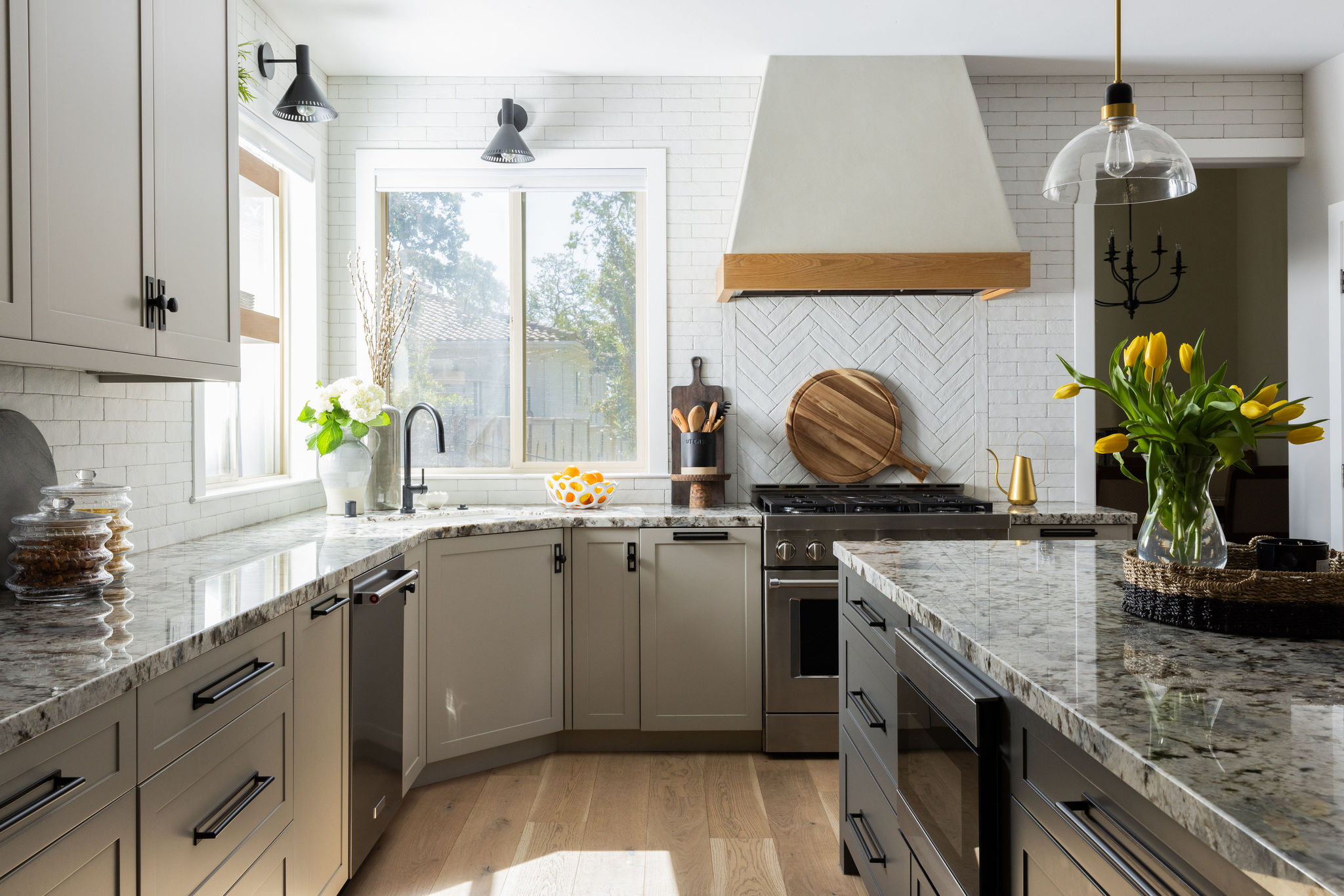
Cathy Tonks is an interior designer with more than twenty years of experience, serving homeowners across the greater Sacramento area and Northern California. A full kitchen remodel typically takes about six to eight months from the first design conversation to your finished space, with roughly four months of the remodeling phase for a medium-sized kitchen. Below, Cathy walks through the entire process, from the first questions she asks to the day you cook your first meal.

There is a moment I spend every project working toward, and it almost always happens without me. It comes once a client is living in their new kitchen, some ordinary morning when they walk in alone, and something about the space stops them where they stand. It is their pinch-me moment, that quiet flash of disbelief that this is really the home they get to wake up in every day.
That moment is the whole point. But if you have never remodeled a kitchen before, everything between today and that moment can feel like a mystery. How long will it take? What happens first? How will you manage while your kitchen is out of commission?
Those are exactly the right questions to ask, and after more than two decades of designing kitchens for homeowners across the greater Sacramento area, I have answered them more times than I can count. And here is what I have learned: when you can see the whole path ahead of you, the parts that once felt daunting start to feel a lot more like an adventure you get to be part of.
Let me be honest with you about something first, because I would rather you hear it from me than discover it halfway through. Remodeling a kitchen is disruptive. For a stretch of time, the heart of your home becomes a construction zone. You lose the room where you cook, where your family gathers, where the day starts and ends. There will be dust, there will be noise, and there will very likely be a surprise or two along the way. It's a lot. Anyone who tells you otherwise is not being straight with you.
So let's answer the most common question first: how long does a kitchen remodel usually take? Most of the kitchens I design take about six to eight months from the day we start talking to the day you cook your first meal, depending on the size of the project and what the house has in store for us. For a medium-sized kitchen, the remodeling phase typically takes about four months once construction begins.
Here is the part that matters, though. All of it becomes so much more manageable when you know what's coming and you have someone beside you who has done this many times before. My job is to carry the weight of the process, so you can keep living your life while your kitchen is transformed. So let me take you through it from the very beginning, the way I would if we were standing in your kitchen together. You can also see the full step-by-step on our interior design process page.
Long before demolition begins, the most important work is already happening. The first thing I want to understand is how you actually use your kitchen. Do you like the way it flows right now? What works, and what has always bothered you? The answers send me straight to the details that will make your daily life easier.
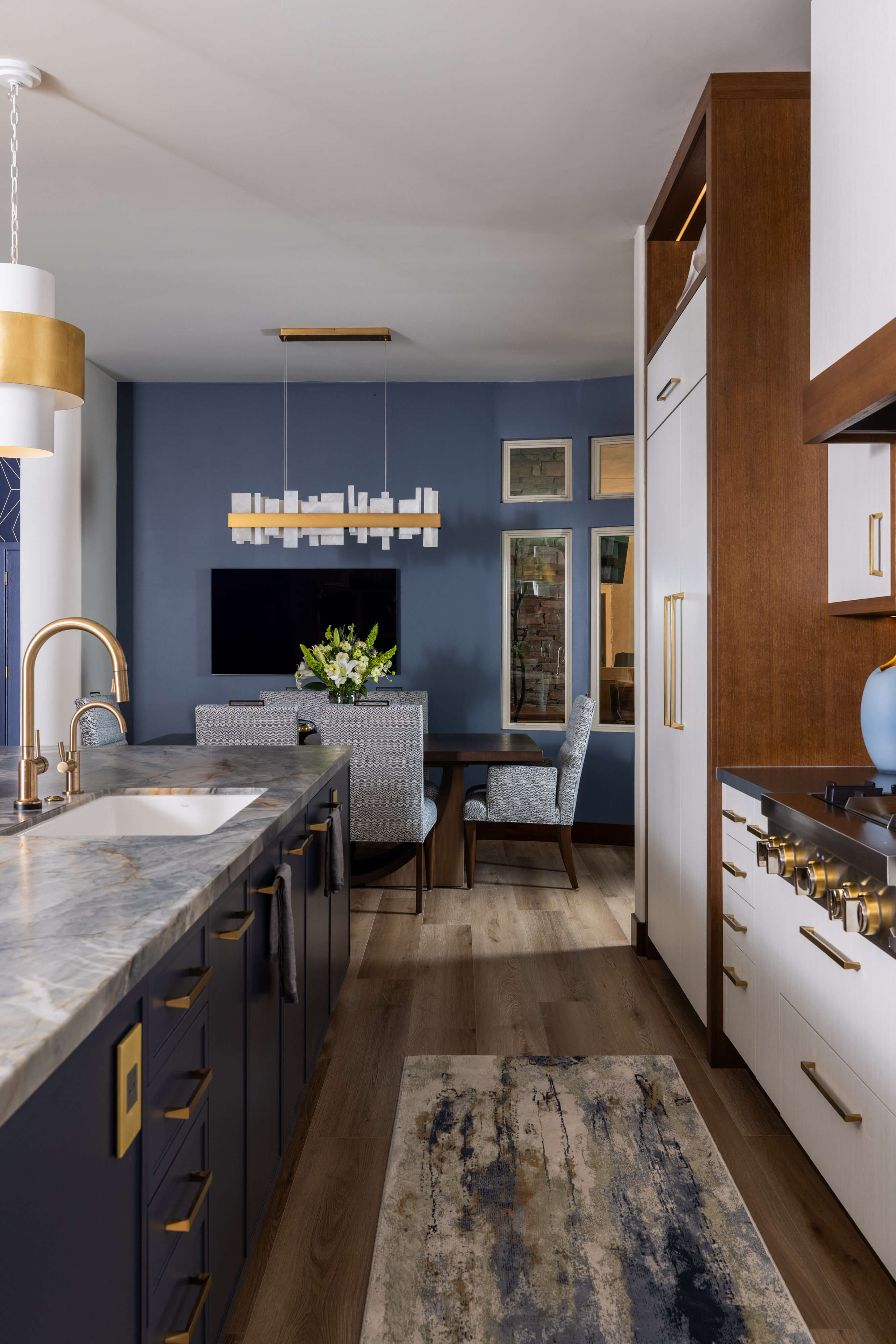
One thing I ask early every time, with a smile, is whether this is a two-butt kitchen. It always gets a laugh, but I am asking for a real reason. If two of you are in there at once, one cooking while the other cleans up, I need to leave enough room so nobody bumps into anyone. If you have kids, that shapes things too. It is why I love tucking a snack and beverage drawer into the outside of the island, so they can grab what they need without ever crossing into the cooking zone. Even something as small as whether you are right or left-handed matters, because it tells me which side of the sink your dishwasher belongs on.
The more I learn about how you cook, the more I can build in the quiet luxuries most people never think to ask for. A pull-out beside the range that holds your utensils, your knives, and your cutting boards, all in reach the moment you need them. A spice drawer right where your hand falls. If you love to bake, a lift that raises your stand mixer up to the counter with one motion, so you never haul it out of a low cabinet again. When a baker sees that lift work for the first time, the reaction is always the same: How did I ever live without this?
Then I ask the big one: is this your forever home, or are you thinking you will move on in a few years? If you are staying, I get to pour your whole personality into the space, with bolder, more personal choices that are unmistakably yours. If you are planning to move on, I design a little more like a real estate agent would, keeping things beautiful but neutral enough to appeal to whoever comes next. Same care, very different kitchen.
These are the questions you never think to ask yourself, and they are exactly what makes a kitchen feel effortless once you are living in it. All of this listening and planning is the heart of the discovery and design phases, and it is some of my favorite time with a client, because this is where your kitchen really starts to take shape. If you are curious about what that very first meeting is really like, I walk through it in more detail in the questions every homeowner asks before their first design consultation.
One thing I hold firm on is that I will not start any demolition or construction until we have gone shopping together for your appliances and plumbing. This is all part of the design phase, which runs a minimum of eight to twelve weeks and covers the shopping, the selections, and the drawings before anything is ordered.
I learned this one the hard way. Years ago, I'd get started, and, halfway through the project, a client would fall in love with a built-in coffee machine or a different range they had not known existed. Suddenly, we were reworking decisions that were already locked in. So now we shop first. I take you to a showroom where we can put our hands on the real thing: the range you will actually cook on, the faucet you will use every day, the built-in espresso machine you did not know you wanted until it was right in front of you. Once we know exactly what is going into your kitchen, down to the depth of the appliances and the spread of the faucet, I finalize the design around those real pieces rather than guessing at them.
A few weeks into the design phase, I bring clients back for what I call a check-in meeting. I lay out renderings, finishes, and early selections so we can make sure my instincts are taking us in the right direction before anything is ordered. If a wall is coming down, this is when we confirm it. If a tile is not quite right, I have options here ready to pull. Getting these big decisions settled early is what keeps the rest of the project moving smoothly.
Once everything is chosen, we order. Cabinets are what set our start date. They take the longest to arrive, usually about eight to ten weeks, and construction cannot begin until they are in. Everything else, like your tile and fixtures, tends to come in faster, so I am gathering all of it while we wait on the cabinets. Once every last piece has arrived, the licensed contractor can begin construction.
.jpg)
Demolition day is one of the most satisfying days of the whole project. The old kitchen comes apart, the walls open up, and you can see the shape of what is coming for the first time. Yes, it is loud and dusty, and your house will feel upended for a little while. But there’s something thrilling about watching the space you have been imagining finally start to become real.
After demolition, the licensed contractor and trade professionals begin the rough work, including plumbing, electrical, and any framing changes. This is the behind-the-walls stage, and it gets inspected and signed off before anything gets closed up. Then comes drywall, texture, primer, and a first pass of paint. We hold the final coat until the very end, because that is when all the touch-ups happen.
Then the cabinets go in. This is the moment I always warn clients about ahead of time. When those cabinets are installed, your brain tells you that you must be almost done. The truth is, we still have a good way to go. Knowing that in advance keeps the anxious feeling from creeping in. After cabinets come countertops, then tile, then plumbing fixtures, then lighting.
Piece by piece, it starts to feel real. The countertops go in and catch the light. The faucet you chose at the showroom is suddenly there at the sink. The under-cabinet lighting comes on and washes warm across the counters, and the whole room you have been picturing for months finally stands in front of you, ready for its first morning coffee and its first big dinner.
I wish I could promise that every project runs exactly to plan. The honest truth is that none of us have x-ray vision, and sometimes a house has been keeping secrets behind its walls.
I recently finished a project where, twenty minutes into the very first day, the contractor called to tell me the living room was flooded with termites. I got my pest team out there right away, coordinated with the contractor to move the crew to another part of the house, and we handled it. When they opened up the walls, they even found snakes living inside. Then upstairs, we noticed the floor was sloping, and the walls kept cracking. There was a load issue. The homeowners had replaced their roof years earlier, switching from a lightweight shake roof to a much heavier concrete tile, and the original work had never been engineered to carry that added weight. We brought in an engineer, added a footing, and jacked that corner of the house back into place.
None of that could have been predicted from the beginning. But here is what I want you to take from these stories: every single one of those surprises got solved because I knew exactly who to call and got on it immediately. That is the real value of having someone experienced guiding your project. When something unexpected shows up, you are not the one scrambling to figure it out. I take care of it the way I have done many times before. At the end, that client told me what stayed with her was how steady the whole thing felt, even with everything that came up along the way. That is exactly what I want you to feel too.
A little preparation goes a long way toward making your remodel feel manageable. Here are the things I tell every client before we begin:
Above all, trust the person you are working with. So much of what makes a remodel go smoothly is preparation and a guide who has navigated all of this before. When you set yourself up well and lean on that experience, the day-to-day becomes far easier to live with.
After more than twenty years of this work, here is what still moves me most. A kitchen designed around a real life does not just look good. It changes how people live in their homes.
Clients who almost never had anyone over start hosting. Your kitchen becomes the place everyone drifts toward, where friends pull up a stool at the island while dinner comes together, and nobody wants to leave at the end of the night. It changes how you feel in your own home, and that has a way of spilling into everything else. There is real meaning in feeling proud of where you live.
This is the part that makes the months of dust and patience worth it. So if you take one thing from all of this, let it be this: keep your eye on the light at the end of the tunnel. The disruption fades fast once you are living in the kitchen you waited for, and what is left is a space that gives back to you every single day. You’re also never walking that road alone. From the first conversation to the day you cook your first meal, I am right there beside you.
If you are thinking about remodeling your kitchen anywhere across the greater Sacramento area and Northern California, I would love to walk you through what the process could look like for your home. And whenever you are ready, reach out to schedule a discovery call, and let's start that conversation.